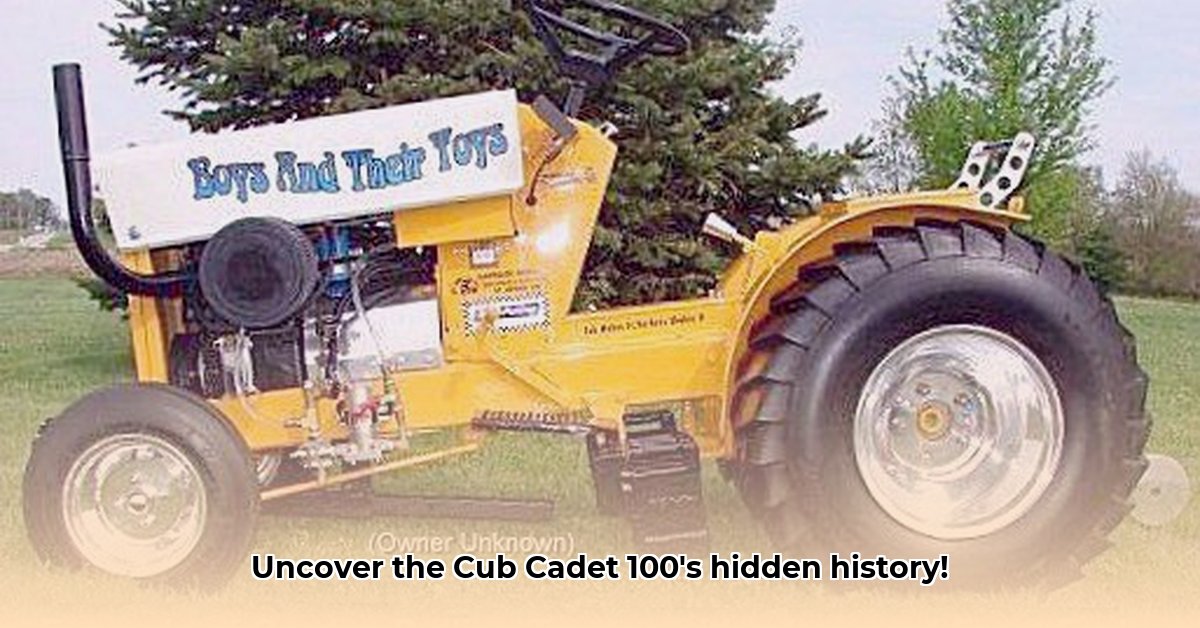
Cub Cadet 100 Pulling Tractor: A Timeless Classic
The Cub Cadet 100 isn't just a garden tractor; it's a piece of Americana, a testament to a bygone era of robust engineering and enduring appeal. Its journey, from its International Harvester origins to its current status as a coveted classic, is a compelling story of innovation, community, and a legacy that continues to thrive. This guide delves into the history of the 100, exploring its design, its evolution under different ownership, and the passionate community that keeps its spirit alive. For troubleshooting tips, check out this helpful resource: Troubleshooting Guide.
The International Harvester Era (The Birth of a Legend): 1960s - 1980s
Emerging in the 1960s, a period of burgeoning post-war prosperity, the Cub Cadet 100 capitalized on the growing demand for reliable, compact garden tractors. Born from the renowned International Harvester (IH) lineage, known for its sturdy farm equipment, the 100 inherited a DNA of resilience. Imagine a smaller, more manageable version of their powerful agricultural machines, but with the same robust engineering. This wasn't a flimsy lawn ornament; it was a workhorse built to tackle demanding tasks. IH's marketing acumen shrewdly targeted property owners who valued dependability and versatility. The 100's adaptability—with attachments ranging from mowers to snow blowers—made it a year-round asset. The availability of various engine options catered to diverse budgets and needs, cultivating a loyal customer base that persists today. Why did this tractor resonate so strongly with its owners? Perhaps it's a reflection of their pride in possessing a durable and reliable machine constructed to last. Stories from long-time owners paint a vivid picture of an era when products were built to endure, not to be quickly replaced. The Cub Cadet 100 was more than a tractor; it was an investment representing hard work and ownership pride.
The MTD Acquisition and Beyond: 1981 - Present
The acquisition of Cub Cadet by MTD Products in 1981 marked a significant turning point. While Cub Cadet initially maintained some operational independence, its integration into MTD's larger structure gradually changed the brand's approach. Did this change enhance or diminish the 100? Some enthusiasts believe that MTD's focus shifted towards increased production volume and broader market appeal, potentially compromising the original IH-era emphasis on ruggedness and specialized features. Others maintain that MTD successfully updated the brand for a contemporary market, offering more choices while making these machines accessible to a wider audience. The reality likely lies somewhere in between. This period witnessed adjustments in manufacturing strategies, marketing campaigns, and parts sourcing—changes influencing the Cub Cadet 100 and its legacy. Whether these changes benefited or harmed the 100 remains a subject of ongoing debate among enthusiasts. Further investigation into the business decisions of the era and their long-term effects would be beneficial.
The Cub Cadet 100 Today (Legacy and Enthusiasm): A Thriving Community
Despite the passage of time and changes in ownership, the Cub Cadet 100 retains remarkable popularity. Online forums dedicated to these tractors are vibrant hubs of activity, showcasing the enduring passion of their owners. These virtual communities serve as invaluable resources for troubleshooting, restoration advice, and connecting with fellow enthusiasts. Their stories are captivating: accounts of meticulous restorations, inventive solutions to parts scarcity, and the pride owners take in keeping these machines running. These collective efforts underscore the quality of the original design. The age of these tractors does present challenges, however. Getting replacement parts can be difficult, turning the search process into a rewarding and sometimes unexpected journey. This challenge, paradoxically, strengthens the bonds between owners—a shared dedication to preserving a piece of history. The vibrant restoration market for Cub Cadet 100s mirrors their enduring appeal. The restoration process itself seems to deepen the connection between owner and machine; it's a labor of love bridging past and present.
Conclusion: An Enduring Legacy
The Cub Cadet 100 transcends its status as a garden tractor; it's a time capsule, a nostalgic link to a bygone era of quality and craftsmanship. For many, it's not merely a machine but a cherished possession, a source of pride, and a testament to the skill of past engineers. Its enduring allure underscores the lasting impact of simple, well-engineered machines and the deep connection people form with durable, dependable tools. The story of the Cub Cadet 100 illustrates ingenuity, community, and a persistent appreciation for quality. Its journey continues, fueled by the passion of its owners and the captivating allure of a truly exceptional machine.
Key Differences: Then and Now
| Feature | International Harvester Era | MTD Era |
|---|---|---|
| Manufacturing Focus | Quality, durability, longevity; fewer models produced. | Higher volume production; potentially wider range of models. |
| Marketing Emphasis | Ruggedness, dependability, targeted towards landowners. | Broader market appeal, potentially greater emphasis on cost. |
| Parts Availability | Currently more challenging to find original parts. | Potentially easier to locate parts, though original parts may be rare. |